While their appeals are pending, the Madras High Court permits prisoners to request temporary parole.
An earlier ban on considering inmates' requests for regular and emergency leave under the Tamil Nadu Suspension of Sentence Rules was suspended by the court.
While their appeals against conviction are pending before the High Court or the Supreme Court, a five-judge bench of the Madras High Court has allowed convicts to request ordinary and emergency leave [Sheefa Rani v. State Secretary].
Incarceration does not reduce fundamental rights to a "parchment promise," according to a five-judge bench consisting of Chief Justice Sushrut Arvind Dharmadhikari, JusticesCV Karthikeyan, AD Jagadish Chandira, M Nirmal Kumar, and Sunder Mohan.
The Court stated, "Leave and temporary release are aspects of human dignity that cannot be suspended indefinitely merely due to the pendency of a judicial appeal." While taking into consideration a reference on the interpretation of the Tamil Nadu Suspension of Sentence Rules, 1982, the Bench issued the interim ruling. Conflicting opinions among co-ordinate Full Benches on whether prisoners whose appeals against conviction are pending before the High Court or the Supreme Court could be given leave under the 1982 Rules led to the formation of the bigger Bench. In Mukesh Kumar v. State (Govt of NCT of Delhi), the Court was informed that the Supreme Court is currently examining the more general question of parole, furlough, and remission policies among States.
In that case, Tamil Nadu has also been involved. Nonetheless, the High Court ruled that the current legal ambiguity cannot lead inmates to suffer in the interim.A state of legal uncertainty cannot be permitted to impair the freedom of convicted convicts before the resolution of the issues by this Larger Bench and the eventual ruling of the Apex Court in
the Mukesh Kumar case (above), which is said to rule the entire country." As a result, a previous directive that was issued on November 19, 2025, prohibiting the High Court Registry from considering requests for ordinary or emergency leave under the 1982 Rules, was put on hold by the Bench.
In accordance with the Full Bench ruling in T Ramalakshmi v. State, the Court instructed the Registry to consider such petitions.
Additionally, it mandated that prison administrators throughout Tamil Nadu handle requests for both regular and emergency release in accordance with the 1982 Rules and evaluate each case independently. The Court noted that "denying the prisoners the benefit of the 1982 Rules would be to ignore the explicit exclusionary boundary set by Rule 35 of the 1982 Rules."
Additionally, the Court made it clear that the Supreme Court's Constitution Bench decision in KM Nanavati v. State of Bombay does not automatically preclude the consideration of leave requests under statutory prison regulations. It stated that Nanavati handled an unusual case in which the Governor had deferred a sentence while the Supreme Court's procedures were ongoing. According to the High Court, that decision did not address temporary release under pre-existing statutory jail regulations.
The Bench stated that "the grant of leave for a temporary period, which can extend to a maximum of 40 days per year, would not in any way interfere with the power of this Court or any appellate Court to grant or deny the suspension of sentence pending the appeal." The petitioners were represented by attorneys R Sankarasubbu, M Radhakrishnan, R Muniyapparaj, and Janardhanan.
Government Advocates CR Malarvannan and A Mohammed Imran, as well as State Public Prosecutor R John Sathyan, represented the State.
R John Sathyan Senior Advocate Abudu Kumar Rajaratnam and Advocate Thiruvadi Kumar served as amicus curiae for the Court.
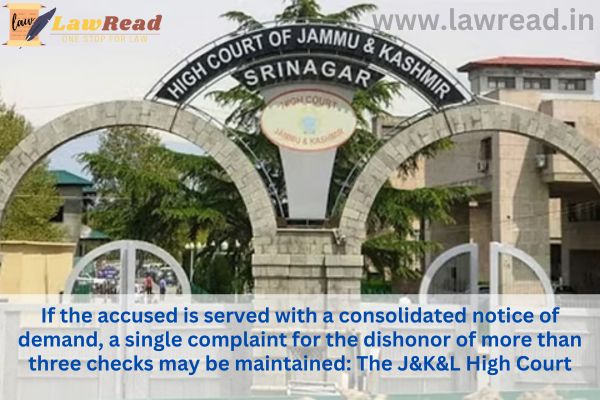
If the accused is served with a consolidated notice of demand, a single complaint for the dishonor of more than three checks may be maintained: The J&K&L High Court
Orissa High Court Shares Concerns About Data Breach & Privacy Violations While Upholding Mandatory PAN-Aadhaar Linking For Demat Accounts
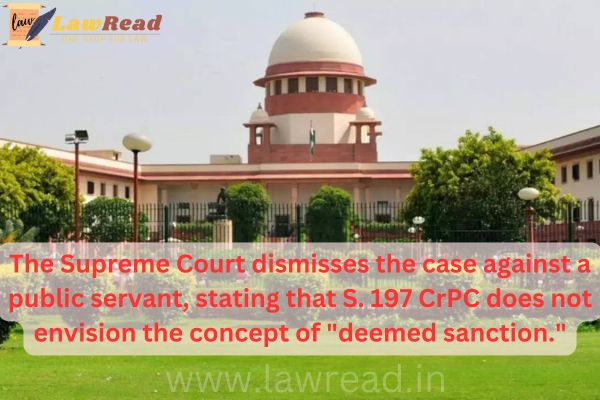
The Supreme Court dismisses the case against a public servant, stating that S. 197 CrPC does not envision the concept of "deemed sanction."
Community Invitation
Enjoying LawRead?
You've been reading on LawRead! Create a free student or advocate account to unlock our complete legal platform:
Premium Courses & Mock TestsJudiciary, UGC-NET, and Bar examination lecture bundles, video classes, and structured notes.
Community Discussion ForumAsk legal questions, reply to ongoing case discussions, and connect with legal scholars and peers.
Unlimited PDF DownloadsDownload Bare Acts, landmark judgments, study notes, and legal updates without any limit.
Already have an account?•
Sign in to LawRead
Free Download Limit Reached (2 of 2 used)
Sign in or create a free account to download this PDF and enjoy unlimited access across all Bare Acts, Notes & Judgements.

.jpg)