The Supreme Court has ruled that an insurer must compensate a vehicle owner who has vicarious liability for the negligence of his employee-driver.
The Insurance Company filed the petition before the Apex Court, bringing up the subject of contributory negligence.
Although the Supreme Court upheld the judgment imposing full liability on the offending vehicle in a motor accident case, it noted that the insurer who insured the vehicle is required to compensate the vehicle's owner, who bears vicarious liability due to the carelessness of his employee driver.
The Insurance Company filed the petition before the Apex Court, bringing up the subject of contributory negligence.
The Division Bench, which includes Justices K. and Sudhanshu Dhulia.
"We believe that the High Court's ruling imposing full liability on the offending vehicle, its owner, and driver is entirely appropriate given the entirety of the circumstances as disclosed by the evidence on file," stated Vinod Chandran. The petitioner-insurer, who has insured the vehicle, is required to compensate the vehicle's owner, who bears vicarious obligation for the carelessness of his employee, the driver.
The Respondent was represented by Advocate D. Bharat Kumar, and the Petitioner was represented by AOR Prerna Mehta.
Historical Context
When a truck struck a motorcycle and the biker was killed, the company was the insurance company. The deceased's mother and wife filed the claim petition, and the tribunal determined that the deceased had contributed to their own negligence. Half of the award amounts' obligation was allocated to the truck's insurance. The insurer and the claimants appealed to the High Court. The truck driver was judged to have been negligent only by the High Court, which increased the judgment amounts. The Apex Court then received the petition.
Justification
According to the Bench, the truck driver claimed in his deposition that there was no collision at all and that the only reason the case was brought against him was because he was operating a larger vehicle. However, RW3, the investigating officer, provided evidence that was in opposition to acknowledging the accident between the truck and the bike. He used the fact that both drivers had contributed to the accident as proof. During cross-examination, however, he acknowledged that the motorcycle's position might have altered by the time he arrived at the location.
It was seen that the investigating officer's charge sheet against the truck driver and his deposition about the biker's recklessness were at odds. Additionally, he explained that the truck driver was charged since the motorcycle driver had been killed in the collision. The Investigating Officer testified before the Claims Tribunal on behalf of the respondent, and the Bench could not support the aforementioned assertions."We cannot rely on RW1's interested testimony or RW3's statements, which contradict his own investigational findings," the statement stated.
According to the Bench, the High Court erred in imposing full blame on the offending vehicle's owner and driver. In rejecting the Special Leave Petition, the Bench ordered that the claimants receive the money placed in court, plus interest, if it hasn't already been done so, and that any remaining funds, plus interest, be paid within a month.
Title of Cause: Reliance General Insurance Company Limited v. Swati Sharma and Others (Source: 2025 INSC 487)
Looks:
Appellant: Prerna Mehta, AOR
Respondent: AOR Gopal Jha, AOR Mamta Saxen, Advocates Rajesh Kandari, Ashish Kumar Upadhyay, Maitri Goal, AOR P. V. Yogeswaran, Advocates D. Bharat Kumar, Aman Shukla, M. Chandrakanth Reddy, and AOR
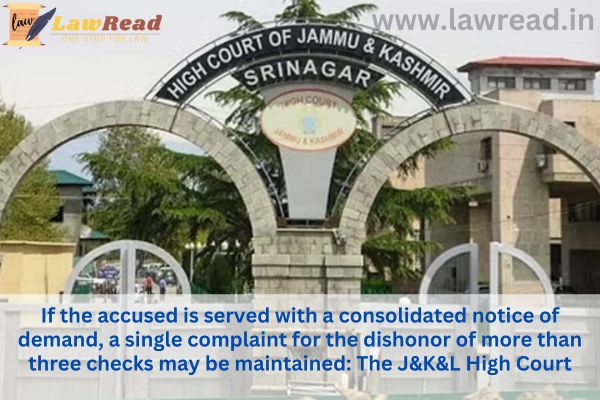
If the accused is served with a consolidated notice of demand, a single complaint for the dishonor of more than three checks may be maintained: The J&K&L High Court
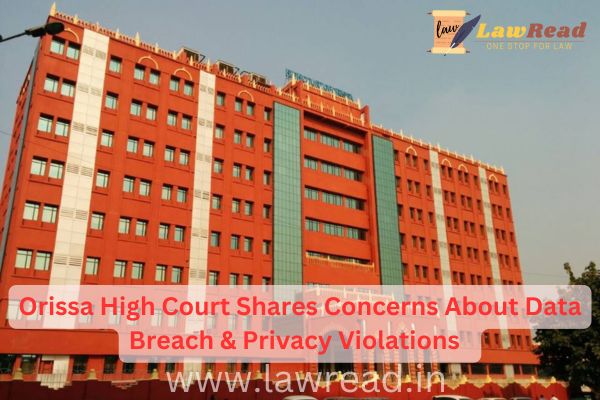
Orissa High Court Shares Concerns About Data Breach & Privacy Violations While Upholding Mandatory PAN-Aadhaar Linking For Demat Accounts
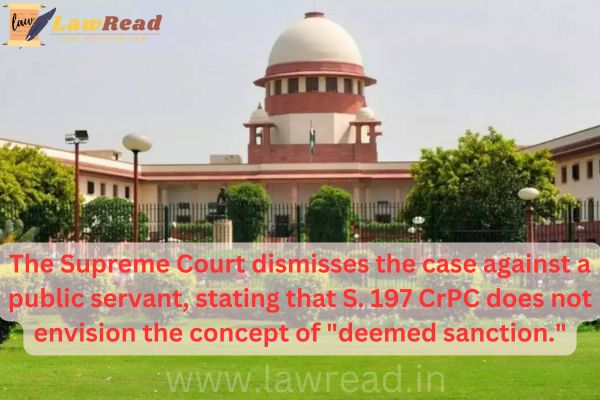
The Supreme Court dismisses the case against a public servant, stating that S. 197 CrPC does not envision the concept of "deemed sanction."
Community Invitation
Enjoying LawRead?
You've been reading on LawRead! Create a free student or advocate account to unlock our complete legal platform:
Premium Courses & Mock TestsJudiciary, UGC-NET, and Bar examination lecture bundles, video classes, and structured notes.
Community Discussion ForumAsk legal questions, reply to ongoing case discussions, and connect with legal scholars and peers.
Unlimited PDF DownloadsDownload Bare Acts, landmark judgments, study notes, and legal updates without any limit.
Already have an account?•
Sign in to LawRead
Free Download Limit Reached (2 of 2 used)
Sign in or create a free account to download this PDF and enjoy unlimited access across all Bare Acts, Notes & Judgements.

.jpg)