Delhi High Court: Saying "Maro Sale Ko" during a fight does not demonstrate intent to kill More than 42 years after the incident, the court cleared a murder suspect, noting that the word "Maro" in "Maro sale ko" may refer to beating rather than killing.
Delhi High Court
Check out this article.
A man found guilty in a 1983 murder case for reportedly yelling the words "Maro Sale Ko" during a deadly altercation inside a DTC bus was recently acquitted by the Delhi High Court, which held that the phrase alone was inadequate to demonstrate a common purpose to kill [Mukesh Kumar v. State of Delhi]. While giving the accused, Mukesh Kumar, the benefit of the doubt, a Division Bench of Justices Navin Chawla and Ravinder Dudeja noted that the word "maro" may signify to beat rather than to kill.
The Court stated, "The use of the words 'Maro Sale Ko' by themselves also does not imply the intention to kill; they can also be attributed to the intention to hurt."
Justices Ravinder Dudeja and Navin Chawla
The case was based on an incident that happened onboard a Delhi Transport Corporation (DTC) bus on route number 431 on December 1, 1983. The prosecution claims that two female passengers were mistreated by a gang of young guys. An argument started inside the bus after Vinod Kumar and his pals objected. Co-accused Balvinder Singh allegedly stabbed Vinod during the incident, and he later died from his wounds. Co-accused Mukesh Kumar, who was standing at the back of the bus, allegedly encouraged the others by yelling "Maro Saale Ko," according to the prosecution. Four people were taken into custody as the investigation got underway, including Mukesh Kumar. They claimed that witnesses had previously seen them, so they declined to take part in a Test Identification Parade (TIP). Following that, a chargesheet was submitted under Indian Penal Code (IPC) Sections 302 (murder), 307 (attempt to kill), and 34 (acts done with common intention). Mukesh and two others were found guilty of murder in August 2004 by a Delhi trial court under Section 302 read with Section 34 of the IPC. Mukesh received a life sentence. He filed an appeal of his conviction with the High Court.
Mukesh contended before the High Court that the prosecution had not demonstrated that he and the co-accused had a shared purpose to commit murder. He also highlighted inconsistencies in the eyewitness accounts and questioned the validity of the identification procedure. These arguments had merit, according to the High Court. Serious reservations about the TIP procedures were raised by the Bench. It made reference to witness statements suggesting that witnesses may have seen the accused prior to the identification process. The Court stated that even Mukesh's later identification (dock identification) in court became untrustworthy in such circumstances.
The Court further observed that Mukesh had not been implicated in any overt act involving a weapon. The main basis for the prosecution's case against him was the claim that he had yelled "Maro Saale Ko." Examining whether this was enough to trigger Section 34 IPC, the Court determined that the prosecution had not proven that Mukesh and the co-accused had a shared purpose to kill.
The Bench noted that there was no proof that Mukesh had any prior plans with the co-accused or that he knew they were carrying blades. It also pointed out discrepancies in witness accounts about the claimed exhortation's timing and context. As a result, it overturned his conviction and cleared him of all charges. Importantly, the Delhi High Court has been hearing the issue for 22 years.
Advocates Himanshu Anand Gupta, Mansi Yadav, Karan Jain, Mike Desai, and Shekhar Anand Gupta represented Mukesh. Advocates Manvendra Yadav and Atiq Ur Rehman, as well as Additional Public Prosecutor Aman Usman, represented the State.
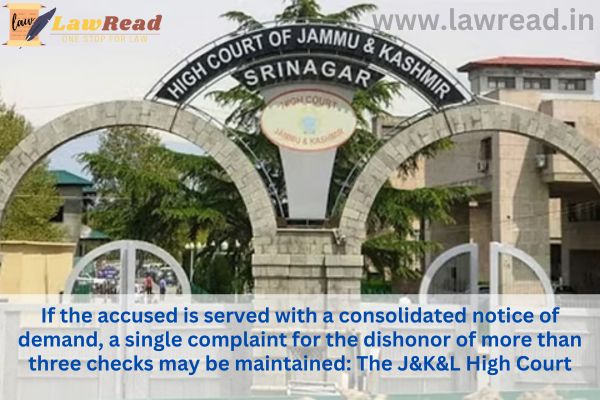
If the accused is served with a consolidated notice of demand, a single complaint for the dishonor of more than three checks may be maintained: The J&K&L High Court
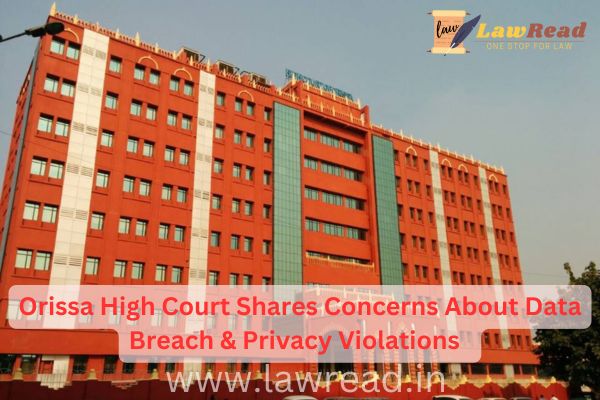
Orissa High Court Shares Concerns About Data Breach & Privacy Violations While Upholding Mandatory PAN-Aadhaar Linking For Demat Accounts
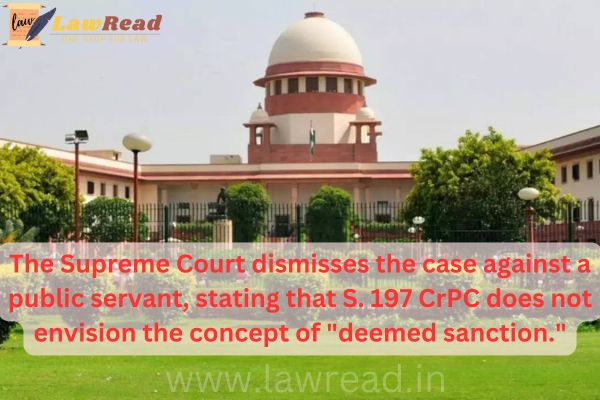
The Supreme Court dismisses the case against a public servant, stating that S. 197 CrPC does not envision the concept of "deemed sanction."
Community Invitation
Enjoying LawRead?
You've been reading on LawRead! Create a free student or advocate account to unlock our complete legal platform:
Premium Courses & Mock TestsJudiciary, UGC-NET, and Bar examination lecture bundles, video classes, and structured notes.
Community Discussion ForumAsk legal questions, reply to ongoing case discussions, and connect with legal scholars and peers.
Unlimited PDF DownloadsDownload Bare Acts, landmark judgments, study notes, and legal updates without any limit.
Already have an account?•
Sign in to LawRead
Free Download Limit Reached (2 of 2 used)
Sign in or create a free account to download this PDF and enjoy unlimited access across all Bare Acts, Notes & Judgements.

.jpg)