TCS Nashik case: The court grants pregnant accused Nida Khan bail, citing the stigma associated with "prison-birth."
The Court stated that no one can tolerate such a scenario, especially when the wellbeing of an unborn child is at stake.
Nida Khan, who is accused of sexual harassment and religious pressure in the Tata Consultancy Services (TCS) Nashik BPO case, was recently granted bail by a Nashik court, citing her pregnancy and the social shame associated with having a child born in prison [Nida Khan v. State of Maharashtra & Anr].
The Court stated that no one can tolerate such a scenario, especially when the wellbeing of an unborn child is at stake. Additional Sessions Judge KG Joshi stated in his July 6 ruling that judicial discretion must be used to spare Nida Khan, who is five months pregnant, from such an agonizing circumstance.
"No one can handle the social stigma or the trauma of giving birth in prison like Lord Krishna." The Court noted, "It would be just and proper to exercise judicial discretion in favor of the applicant accused in order to avoid such a painful situation and to welcome the newborn baby and the overall welfare."
It further stated that there was less need for additional detention because the investigation was finished and the chargesheet had been filed. "No property is in the process of being discovered or seized. Her custody has not been requested by the prosecution in order to conduct additional research. The judge stated in the ten-page ruling that "keeping the applicant in jail will not serve any purpose."
The Court determined that there was prima facie evidence of Khan's involvement in the forced conversion claims, but it made clear that the evidence would need to be tested during the trial.
In accordance with the provisions of the Scheduled Castes and Scheduled Tribes (Prevention of Atrocities) Act, the Nashik Police filed a formal complaint under the Bharatiya Nyaya Sanhita against Khan and seven other employees of TCS's Nashik office for offenses including sexual harassment and offending religious sentiments. Khan was cited in the FIR along with co-accused Danish Shaikh and Tausif Attar for allegedly plotting to harm the complainant's religious feelings and persuade her to convert.
In addition to installing Islamic apps on the complainant's phone and giving her a burqa, Khan is accused of visiting her home to teach her religious customs. Additionally, investigators claimed a more extensive conversion strategy that was backed by witness accounts and digital proof. Ajay Misar, the Special Public Prosecutor, objected to the plea, citing the possibility of witness intimidation, evidence tampering, and emotional coercion. Rahul Kasliwal, Khan's attorney, contended that the accusations were illegitimate and overstated. He argued that she was wrongly accused of sexual offenses that had nothing to do with her.
Additionally, he argued that there is no law in Maharashtra that makes religious conversion illegal. He contended that, at most, the case reveals a less serious crime for which bail is acceptable.
On July 6, the Court granted bail on a personal bond of ₹75,000 with a solvent surety, subject to restrictions on contact with the complainant, admission into specific locations, and travel abroad, after taking into account the arguments made by both parties.
A day later, the decision was changed to allow ₹50,000 in temporary cash security for four weeks, provided that a surety was provided after that.
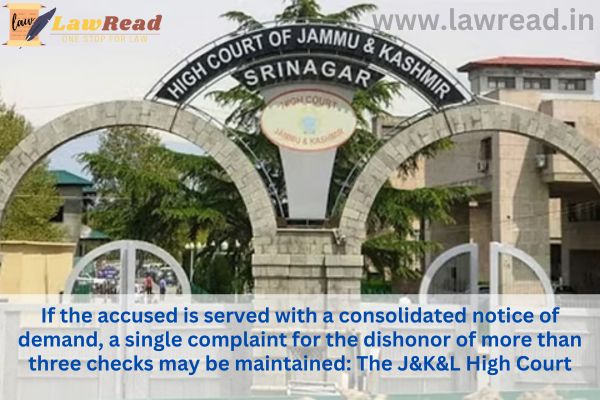
If the accused is served with a consolidated notice of demand, a single complaint for the dishonor of more than three checks may be maintained: The J&K&L High Court
Orissa High Court Shares Concerns About Data Breach & Privacy Violations While Upholding Mandatory PAN-Aadhaar Linking For Demat Accounts
The Supreme Court dismisses the case against a public servant, stating that S. 197 CrPC does not envision the concept of "deemed sanction."
Community Invitation
Enjoying LawRead?
You've been reading on LawRead! Create a free student or advocate account to unlock our complete legal platform:
Premium Courses & Mock TestsJudiciary, UGC-NET, and Bar examination lecture bundles, video classes, and structured notes.
Community Discussion ForumAsk legal questions, reply to ongoing case discussions, and connect with legal scholars and peers.
Unlimited PDF DownloadsDownload Bare Acts, landmark judgments, study notes, and legal updates without any limit.
Already have an account?•
Sign in to LawRead
Free Download Limit Reached (2 of 2 used)
Sign in or create a free account to download this PDF and enjoy unlimited access across all Bare Acts, Notes & Judgements.
.jpg)